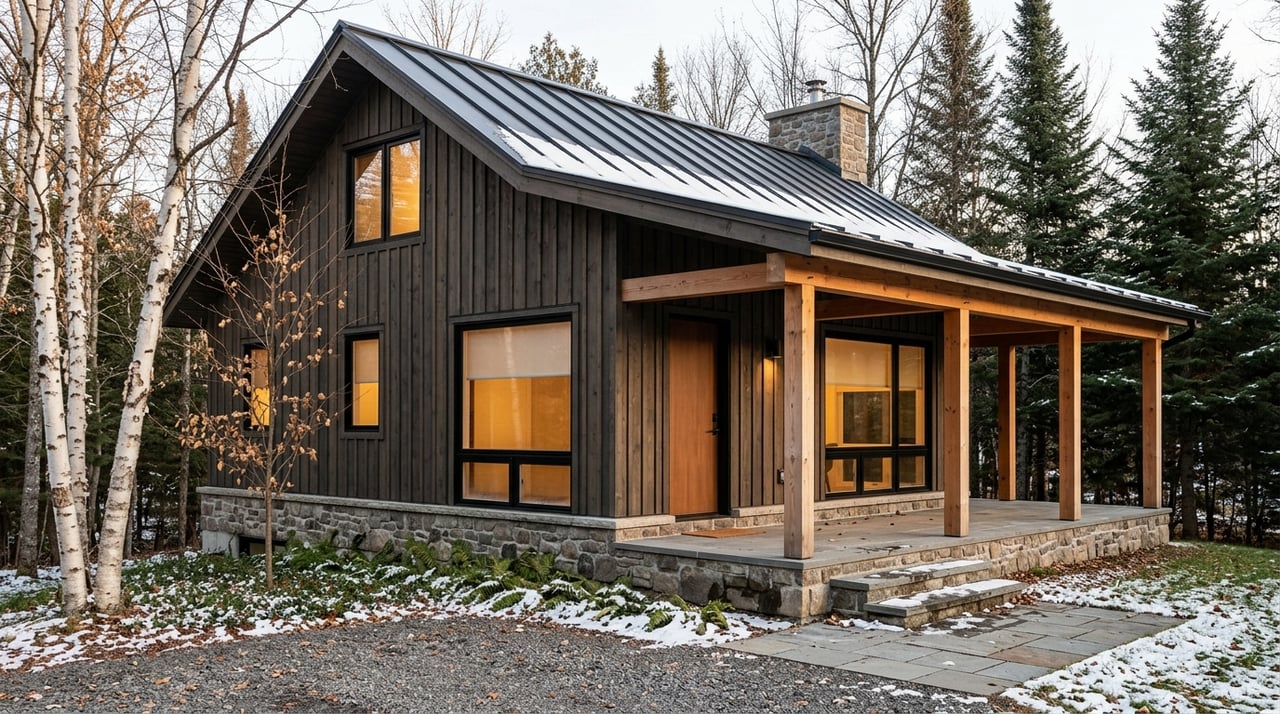
Looking for a cabin or country home in Marlboro, Vermont? You are not alone. Buyers are drawn to Marlboro for its privacy, wooded acreage, and four-season lifestyle, but this is also a market where inventory can be limited and each property comes with its own set of practical details. In this overview, you will get a clear picture of what kinds of homes show up in 05344, what price ranges look like, and what to check before you make a move. Let’s dive in.
What Marlboro Real Estate Feels Like
Marlboro is a rural hill town in southern Windham County with a low-density housing pattern shaped by forest land, acreage, and a small road network. According to the town plan, residential use is the biggest land-use category, while most commercial and industrial activity is concentrated along Route 9.
That setting matters when you shop for property here. Marlboro has no public water or sewer, and many secondary roads are narrow and unpaved. In practical terms, that means your home search often includes questions about wells, septic systems, road access, snow conditions, and parcel-specific infrastructure.
This is also a relatively thin market. The town’s 2025 municipal report noted 64 property transfers, including single-family homes, camps, and open land parcels, with only a handful of new dwellings started. Public portals also show very limited active inventory, so buyers usually need to monitor listings closely and be ready when the right property appears.
Common Property Types in Marlboro
Cabins and Camps
Cabins and camps are a real part of the Marlboro market, not just a style label. Public examples include a 1-bedroom, 1-bath cabin or camp on 8.3 acres listed at $324,900 and a small off-grid cabin that sold for $90,000 in 2023.
These properties can appeal to buyers who want a simpler setup, a recreational base, or a lower entry point into the Southern Vermont market. At the same time, the lower price point often comes with tradeoffs like smaller size, fewer utilities, or a more rustic setting.
A-Frame and Chalet-Style Homes
If you picture a classic Southern Vermont getaway, this is often the category you have in mind. Marlboro listings may use terms like A-frame or post-and-beam more often than chalet, but the overall feel is similar: wooded lots, vaulted spaces, fireplaces, and a strong connection to the landscape.
A current example is a 2-bedroom, 2-bath A-frame on 2.18 acres listed at $319,000. Homes in this style tend to attract second-home buyers and weekend users who want character, privacy, and a home that feels tied to the setting.
Country Homes and Homesteads
Marlboro also offers larger country homes where land is one of the biggest selling points. In this segment, privacy, acreage, and outdoor features can matter as much as square footage.
Public examples include a 40.8-acre homestead on Moss Hollow Road with woods, streams, and trails, and a 14.1-acre post-and-beam home on Stratton Hill. For many buyers, these properties represent the deeper Marlboro appeal: room to spread out, direct access to nature, and a quieter pace than more built-up resort areas.
Land and Future Build Sites
Land is a meaningful part of the local market mix. Public listings have included parcels around 3.69 acres for $69,000, 16.48 acres for $175,000, and 30 acres for $249,000.
These properties are often marketed as future home sites or recreational land. If you are considering land in Marlboro, the value is not just in the acreage number. Usability, access, topography, utilities, and permitting realities can shape what a parcel is really worth to you.
Marlboro Price Ranges at a Glance
A useful public benchmark is Zillow’s average home value for Marlboro of $396,710 as of March 31, 2026. That does not mean every home fits neatly at that number, especially in a small market where a few sales can shift the data.
Still, public pricing gives you a practical framework:
- Lower end: off-grid or very simple cabins can sell around $90,000
- Entry-level cabin market: some cabin or camp listings can land around the low $300,000s
- Mid-range homes: A-frames and country homes often cluster from the low $300,000s into the upper $400,000s
- Higher range: larger acreage homesteads and more upgraded rural homes can reach the $500,000 to $700,000 range or more
Because inventory is so limited, pricing in Marlboro is often shaped by land, condition, utility setup, and privacy as much as by living area alone.
Why Buyers Choose Marlboro
Privacy and Space
Marlboro tends to fit buyers who want elbow room rather than a neighborhood feel. The town’s rural road pattern, forested landscape, and acreage-heavy inventory give many properties a sense of separation and privacy.
If you want walkable village conveniences or a condo-style resort environment, Marlboro may feel too quiet. If you want woods, distance from neighbors, and a property that feels tucked into the landscape, it can be a strong match.
Arts and Culture
Marlboro has an unusually strong arts identity for a small rural town. The town report describes Marlboro Music as part of the community since 1951 and points to the town as a year-round center for the arts, with groups including Marlboro Studio School and Mountains & Music also named in town records.
That cultural presence adds depth to the local lifestyle. For buyers who want more than just a house in the woods, Marlboro offers a blend of quiet rural living and established arts programming.
Four-Season Recreation
Marlboro appeals to buyers who want access to Southern Vermont recreation without being in the middle of a resort base area. The Marlboro Nordic Ski Club maintains trails on Potash Hill, adding cross-country skiing to the town’s local outdoor options.
For downhill skiing, Mount Snow in West Dover is a major regional draw with 601 acres, 86 trails, 18 lifts, and 83% snowmaking coverage. Stratton Mountain Resort and Bromley are also part of the broader recreation picture, which helps make Marlboro attractive for second-home buyers who want a quieter home base within the Southern Vermont ski market.
What to Check Before You Buy
Road Access and Winter Conditions
The town plan notes that many secondary roads are narrow and unpaved. That does not make a property less appealing, but it does mean you should understand year-round access, maintenance expectations, and what winter travel looks like for that specific location.
A scenic road in July can feel very different in January. It is worth confirming the road surface and practical access before you commit.
Water and Sewer Setup
Marlboro has no public water or sewer. Every property needs to be evaluated based on its individual systems, whether that means an existing well and septic or the feasibility of installing them on vacant land.
This is one of the most important differences between Marlboro and more built-up areas. You are often buying not just a house or parcel, but the infrastructure that supports daily use.
Internet Availability
Internet service can vary from one property to the next. Some listings may advertise helpful connectivity features, including fiber internet, but the town-level reality is that service should be verified on every parcel.
That matters even more if you plan to work remotely or use the property often throughout the year. Never assume a road or neighborhood has uniform service.
Tax Value and Public Records
The town’s 2025 CLA was 71.24%, which suggests assessed values may lag sale prices. Marlboro is also in the middle of a reappraisal process, according to town records.
For buyers, that is a reminder to look closely at current comparable sales, listing histories, and local records instead of relying only on assessed value. In a small market, public comps often tell a more useful story than a broad average.
Acreage and Current Use Questions
If you are buying land or a home with substantial acreage, it makes sense to review town lister information and Vermont Current Use guidance. Qualifying forest or agricultural land may be taxed differently, and that can affect how you evaluate holding costs.
Larger parcels can be appealing, but they also deserve extra due diligence. Not every acre will carry the same practical or financial value.
How Marlboro Compares to Nearby Areas
Marlboro sits in an interesting middle ground within Southern Vermont. Compared with Brattleboro, it is more rural and more focused on land, privacy, and low-density living.
Compared with Dover and West Dover near Mount Snow, Marlboro is less resort-dense and generally less centered on base-area convenience. But it still belongs to the same broader recreation market, which is why it can appeal to buyers who want ski access without living in a resort-heavy setting.
Who Marlboro Often Fits Best
Based on the town plan, current listings, and regional recreation options, Marlboro is often a strong fit if you are looking for:
- A second home with privacy and a wooded setting
- A cabin, A-frame, or country home with character
- Acreage for recreation, trails, or a future homesite
- A rural property within the Southern Vermont ski and outdoor market
- A quieter alternative to more resort-focused towns
It can be especially appealing if you are comfortable evaluating property details at the parcel level. In Marlboro, those details matter.
If you are exploring cabins, country homes, or land in Marlboro, having local guidance can make a big difference in a market with limited inventory and property-specific variables. The team at Southern Vermont Realty Group helps buyers and sellers navigate Southern Vermont’s resort, second-home, land, and lifestyle markets with local insight and full-service support.
FAQs
What kinds of cabins are common in Marlboro, Vermont?
- Marlboro often has rustic cabins and camps, including smaller or off-grid options, along with wooded properties that offer a simple recreational setup or entry point into the market.
What is the typical price range for Marlboro Vermont country homes?
- Public data suggests prices can range from about $90,000 for very simple cabins to the low $300,000s for some cabins and A-frames, with many country homes in the low $300,000s to upper $400,000s and larger homesteads reaching into the $500,000 to $700,000 range or higher.
Is Marlboro, Vermont a good place for a second home?
- Marlboro can be a strong fit for second-home buyers who want privacy, acreage, arts and recreation access, and a quieter setting than a resort base area.
What should buyers verify before buying land in Marlboro, Vermont?
- You should verify road access, winter conditions, water source, sewer or septic details, internet availability, and parcel-specific factors that affect how the land can be used.
How close is Marlboro, Vermont to ski areas?
- Marlboro is part of the broader Southern Vermont recreation market, with Mount Snow in West Dover as a key nearby downhill destination and Stratton and Bromley also part of the regional ski picture.
Why is Marlboro inventory sometimes hard to find?
- Marlboro is a small, thin market with limited active listings at any given time, so buyers often need to watch new listings closely and use multiple public data sources when tracking opportunities.